The basics
Value Added Tax has applied in the UAE since 1 January 2018. The standard rate is 5%, and it's administered by the Federal Tax Authority (FTA). As a VAT-registered shop you charge VAT on your taxable sales (output tax), reclaim the VAT you pay on business purchases (input tax) and pay the difference to the FTA for each tax period.
- Standard rate: 5% on most goods and services.
- Some supplies are zero-rated (taxable at 0%) and some are exempt. They're treated differently on the return, so ask your accountant if any of yours might qualify.
- Registration is with the FTA, and you receive a 15-digit Tax Registration Number (TRN).
Do you need to register?
Registration is mandatory when the value of your taxable supplies and imports has exceeded AED 375,000 over the previous 12 months, or is expected to exceed it in the next 30 days. You can choose to register voluntarily from AED 187,500 of supplies or taxable expenses. Once registered, your TRN appears on every tax invoice you issue.
Prices at the counter
Customers pay the price on the shelf, so most UAE shops show VAT-inclusive prices, and prices shown to consumers are generally expected to include VAT. If your shelf price is AED 105.00 including VAT, the VAT inside it is AED 5.00 and your net sale is AED 100.00. The quick way to find the VAT inside a VAT-inclusive price is to multiply by 5 and divide by 105.
| Shelf price (incl. VAT) | VAT inside (× 5 ÷ 105) | Net sale |
|---|---|---|
| AED 10.50 | AED 0.50 | AED 10.00 |
| AED 159.00 | AED 7.57 | AED 151.43 |
| AED 1,050.00 | AED 50.00 | AED 1,000.00 |
Rounding matters when you add up thousands of receipts. A good till calculates VAT the same way every time and keeps the exact figures, rather than recalculating later from rounded totals.
Tax invoices and simplified tax invoices
A VAT-registered business must issue a tax invoice for taxable sales, generally within 14 days of the date of supply. A full tax invoice includes, among other things:
- the words "Tax Invoice", clearly shown;
- your name, address and TRN;
- the customer's name, address and TRN, if they're registered;
- a sequential invoice number and the date of issue;
- a description of what was supplied, with quantities, unit prices and any discount;
- the VAT rate, the VAT amount in AED and the total payable in AED.
For most retail sales you can issue a simplified tax invoice instead: when the customer isn't VAT-registered, or when they are but the sale is AED 10,000 or less. A typical counter receipt showing your details, TRN, the date, the items, the total and the VAT included serves as a simplified tax invoice. Business customers who want to reclaim VAT will usually ask for a full A4 tax invoice.
Returns, refunds and credit notes
When a customer returns goods or you reduce the price after the sale, don't edit or delete the original invoice. Issue a tax credit note that references it. The credit note reduces your output VAT in the period it's issued, and the original invoice stays in your records as it was.
The VAT 201 return
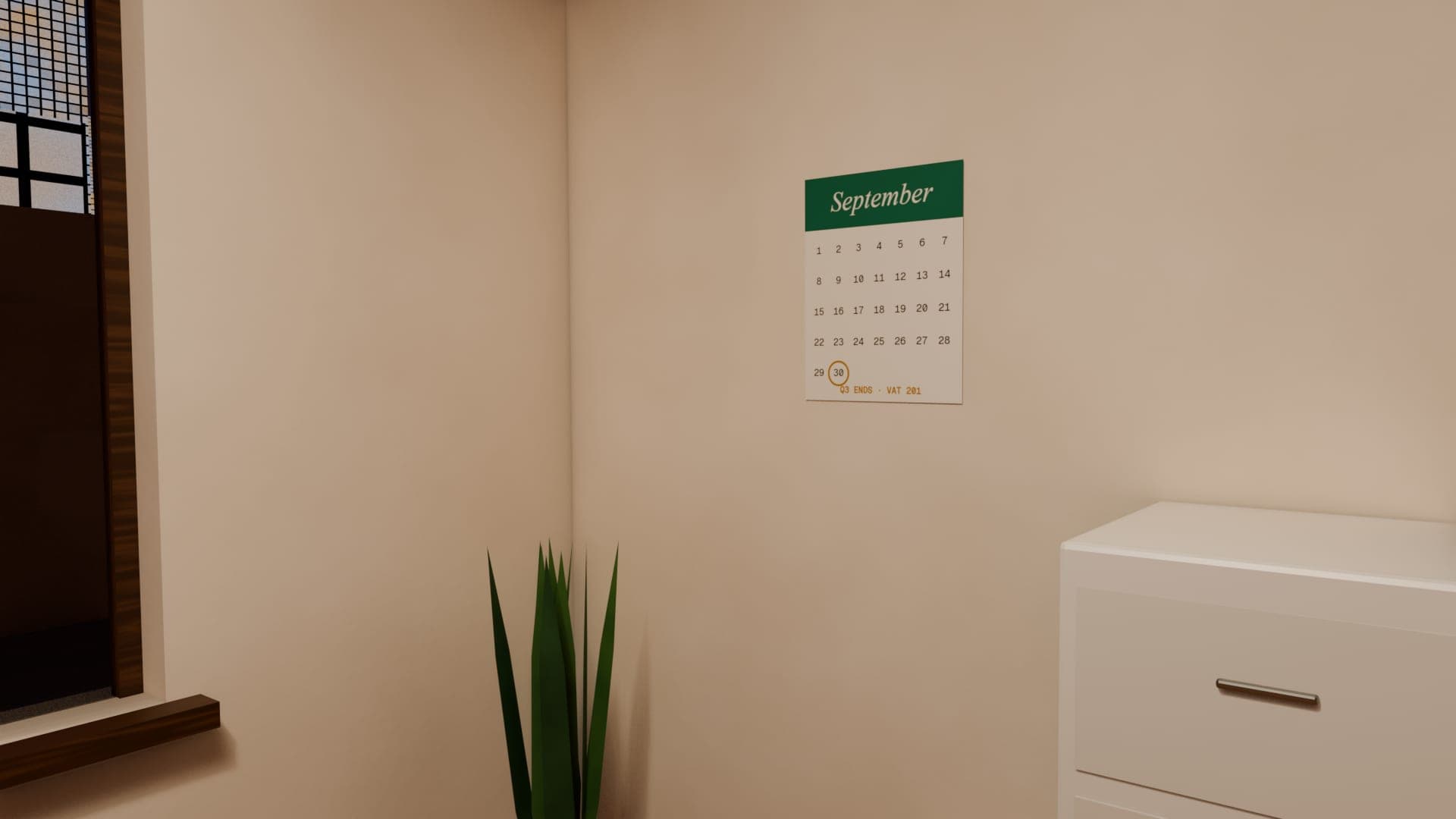
Your VAT return is the VAT 201 form, filed on the FTA's EmaraTax portal. The FTA assigns your tax periods, most often quarterly, and the return and any payment are due within 28 days of the end of each period. For a typical shop, the boxes that matter most are:
| Box | What goes in it |
|---|---|
| 1a–1g | Standard-rated sales, by the emirate where the supply was made, with the VAT on them |
| 9 | Standard-rated expenses you can recover VAT on, with that VAT |
| 12 | Total VAT due for the period |
| 13 | Total recoverable VAT for the period |
| 14 | Payable tax: box 12 minus box 13 (or a refund if negative) |
Other boxes cover tourist refunds, reverse-charge supplies, zero-rated and exempt supplies and imports. If none apply to you, they stay at zero, but check with your accountant before assuming.
Keep the evidence
Keep your invoices, credit notes, purchase bills and the records behind your return, generally for at least five years after the end of the tax period. Thermal receipts fade, so keep the digital record, not just the paper roll.
A quarter-end checklist
- Make sure every day's sales are closed and cashed up.
- Enter all supplier bills and expenses for the period, with their VAT.
- Review returns and credit notes issued in the period.
- Compare the VAT figures with the books; investigate any difference.
- Add anything your till doesn't record, such as imports or reverse charge, when you file.
- File and pay on EmaraTax before the 28-day deadline, then lock the period in your books.
This guide is general information, not tax advice. Rules and thresholds can change; check the Federal Tax Authority's current guidance or ask a registered tax agent about your business.